TLDR: The right sensory pod depends on who will use it and where it will go. Schools, campuses, libraries, and offices usually need a walk-in pod that dampens sound, offers adjustable lighting, stays well ventilated, and lets users leave easily. Check seven features before you buy: sound dampening, lighting control, airflow, size, entry and exit, seating, and visual privacy.
At a Glance:
- Sensory pods have four main use cases, and walk-in sound-dampening pods suit shared facilities best.
- Sound dampening, adjustable lighting, airflow, and an easy exit matter for people who get overwhelmed.
- Autistic users often benefit most from pods with strong sound reduction and a predictable space, while users with ADHD often need fewer visual distractions.
- Public institutions can buy YOURspace pods through its GSA contract, and Quick Ship pods can arrive in as little as six weeks.
Your school, campus, library, or office needs a calm place for people who feel overwhelmed. The tricky part is that “sensory pod” can mean a foam seat, an enclosed sleep bed, or a walk-in room, and each one solves a different problem.
What are the best privacy pods for neurodiverse individuals? To answer that, you first need to understand the basics of choosing.
Sort the four types of pods, work through a seven-point feature checklist, and match your choice to autism, ADHD, and other sensory needs. Then explore YOURspace sensory pods that fit shared spaces.
What Is a Sensory Pod?
A sensory pod is a small, enclosed space that cuts down noise, light, and visual clutter so a person can calm down or focus. It gives someone a predictable place to step away when a busy environment becomes too much.
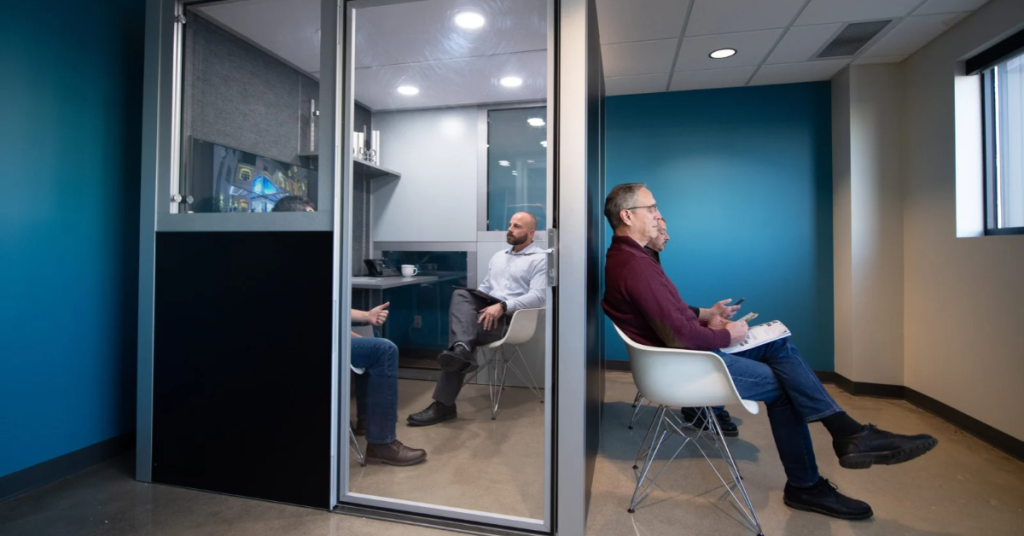
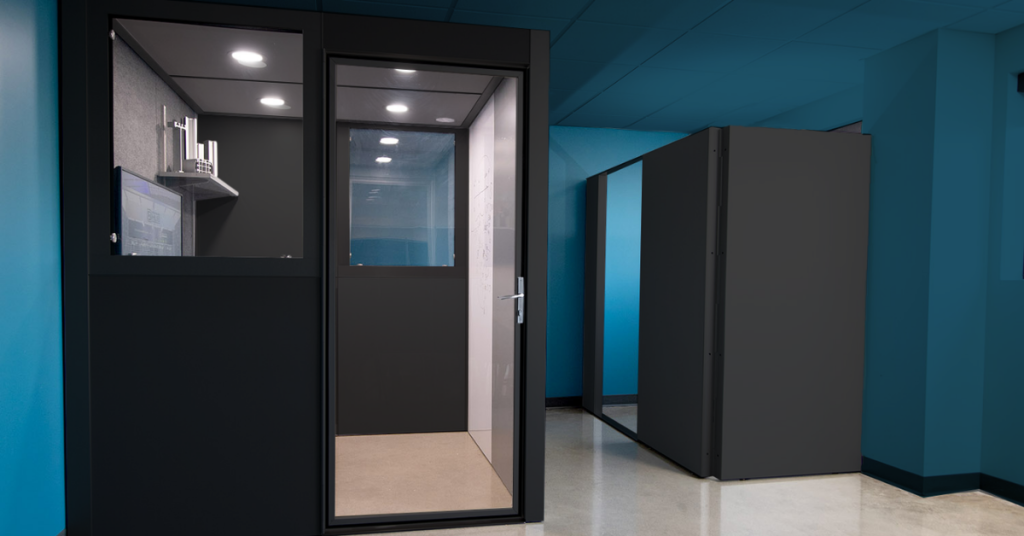
In shared facilities, a sensory pod usually looks like a compact room with walls, a door, seating, and controls the user can adjust. Many people find that a few quiet minutes inside help them return to class, work, or a public space feeling more settled.
Ways to Use a Sensory Pod (and Which Setup You Need)
Sensory pods can offer gentle pressure, safe rest, sensory play, or a quiet reset. Use them as seats and compression pods, sleep pods, interactive multisensory pods, or walk-in sound-dampening pods.
For schools, campuses, libraries, and workplaces, walk-in sound-dampening pods usually make the most sense.
Gentle Pressure With Seats and Compression Pods
Pea pods, inflatable seats, and similar products wrap the body and offer gentle pressure. They work well for small children because they are portable and easy to store. The trade-off: they don’t block sound, so they offer little relief in a loud room.
Safe Rest With Sleep Pods
Sleep pods are enclosed beds that give a person a safe, contained place to rest. Families and care settings often use them at home or overnight. They often don’t suit shared facilities though, where many people need quick, upright access during the day.
Sensory Play With Interactive Multisensory Pods
These pods add lights, sounds, and tactile panels to engage the senses. Therapists often use them to build skills through stimulation. However, that same design can work against someone who needs less input, not more.
A Quick Reset With Walk-In Sound-Dampening Pods
Walk-in pods are small rooms that reduce noise and visual input from the busy space around them. They give users a door, a seat, and space to reset, and they fit the daily rhythm of shared facilities. The trade-off: they need more floor space than a portable seat.
For most shared facilities, the best privacy pods for neurodiverse individuals are walk-in pods, since they reduce input.
This is where YOURspace fits. Our walk-in sensory pods use modular walls and optional accessories, so you can match each pod to the people who will use it.
Explore YOURspace sensory pods.
What to Look for in a Sensory Pod: A 7-Point Checklist
The best privacy pods for people with sensory needs dampen sound, offer adjustable lighting, stay well ventilated, fit their users, and let people come and go easily. Use these seven points to compare any model, including ours.
As you compare, keep one question in mind: is it the best privacy pod for people with sensory needs in your space, or just a quiet booth? The supplier questions below help you tell the difference.
1. Sound Dampening
Noise often triggers overwhelm first, so sound dampening deserves the most attention. A good pod uses layered walls and tight door seals to keep outside noise from carrying in.
YOURspace walls and doors use up to four layers of material to stop unwanted noise. Look for the same detailed construction across the walls, door, and ceiling, since any gap lets sound through.
No pod blocks every sound, so be wary of any supplier that promises total silence. Learn more about how sound dampening works in a pod.
Ask any supplier: How many layers of material do the walls and door use, and how do the seals work?
2. Lighting Control
Harsh overhead light can overwhelm someone as quickly as noise. The best pods let users dim the light to a comfortable level, with no glare and no flicker.
Look for warm, even lighting that users can control from inside the pod. Soft, steady light also helps a pod double as a focus space when someone needs to read or work.
YOURspace offers dimmable LED lighting and exhaust fans as add-ons, so you can choose the lighting your users need.
Ask any supplier: Can users adjust the lighting themselves?
See lighting and airflow options.
3. Airflow and Temperature
An enclosed space should never feel stuffy or warm. Poor airflow makes a pod feel tight and uncomfortable, which defeats the purpose of a calm retreat.
A good pod moves fresh air through the space quietly, so the fan doesn’t become a new distraction. YOURspace pods can include exhaust fans that keep air circulating.
If your building runs warm, ask how the pod handles heat during back-to-back use.
Ask any supplier: How does the pod ventilate, and how much noise does the fan make?
4. Size and Layout
Size shapes how a pod feels, and a cramped space can add stress instead of easing it. Think about who will use the pod: one person alone, a person with a support aide, or someone who uses a wheelchair.
Plan for room to move, a seat or soft floor area, and enough clearance for a support person when needed. Our guide to choosing the right pod size breaks down capacity by use.
Ask any supplier: What sizes do you offer, and can the layout fit a support person or a wheelchair?
5. Easy Entry and Exit
People should never feel trapped inside a sensory pod. The door must open easily from inside with one simple motion, and the user should always feel in control of leaving.
Accessibility matters too. YOURspace offers ADA-compliant configurations with wider doorways, accessible thresholds, and interior layouts that meet accessibility requirements.
Ask for these options at the start of your project, since they affect the pod’s size and layout.
Ask any supplier: Can the pod meet ADA requirements, and how does the door open from inside?
6. Seating and Surfaces
Seating sets the tone for how someone uses the pod. Soft or adjustable seating supports decompression, while a desk or shelf can turn the pod into a focus space as well.
YOURspace pods offer fully adjustable desk and shelf space, so one pod can serve both needs. Choose surfaces that feel comfortable to the touch and clean easily between users.
Ask any supplier: Can the seating and work surfaces adjust?
7. Visual Privacy
Visual privacy comes down to finishes. Windows let staff check in without opening the door, which helps in schools and supervised settings. Solid walls cut visual distractions and give users more privacy.
YOURspace offers windows or solid walls as options, so you can match each pod to its setting.
Ask any supplier: Can I choose between windows and solid walls?
The best privacy pods for sensory needs check all seven of these boxes in every facility.
Choosing a Sensory Pod for Autism
Strong sound reduction, soft and adjustable lighting, a predictable space, and an easy way out matter most in sensory pods for autism. Many autistic people find that consistency and control help them feel safe.
When schools and workplaces shortlist sensory pods, autism support often tops their list of reasons. Quiet comes first, since sudden or constant noise can make a busy day feel unmanageable.
Predictability matters almost as much. An autism sensory pod should look and feel the same every time, with the same seat, lighting, and layout. Avoid features that change on their own or add surprise input.
Control rounds out the list. In a well-planned sensory pod, autism support means the user decides how bright the light is and when to leave. Read more about how sensory pods support students with autism.
Prioritize these:
- Sound dampening
- Lighting control
- Easy entry and exit
Choosing a Sensory Pod for ADHD
For ADHD, cut visual distraction first. Many people with ADHD find it easier to focus or reset when they can’t see movement around them.
Next, decide what the pod is for. A focus pod includes a desk, task lighting, and a comfortable chair for reading or work. A decompression pod includes soft seating and dim light for a short break. Adjustable furniture lets one pod cover both.
Windows versus solid walls matters too. Solid walls reduce distraction, while windows help staff supervise younger users.
When you compare the best privacy pods for sensory needs, autism, and ADHD, you’ll see a lot of overlap. Both groups benefit from quiet and control, but ADHD users often care most about what they can see.
Prioritize these:
- Visual privacy
- Seating and surfaces
- Lighting control
Choosing a Sensory Pod for Other Sensory Needs
A sensory pod can also help people with sensory processing disorder and anyone who feels overstimulated in a busy space. The same checklist applies: quiet, gentle light, fresh air, and a door the user controls.
Not everyone who needs a break has a name for what they feel. Students during exams, employees in open offices, and travelers in busy terminals can all use a calm space to reset.
Design for the widest range of users, and choose adjustable features so each person can set up the space their own way.
Where Sensory Pods Work Best
Sensory pods work best in busy shared spaces where people need a quick, private break, including schools, libraries, college campuses, workplaces, and public spaces. Placement and access matter as much as the pod construction.
Schools and Libraries
Sensory pods for schools give students a calm place to reset without leaving the building. Place the pod near classrooms but away from hallway traffic, and use a simple pass or check-in system so staff know who’s inside. Libraries can use the same approach near popular study areas.
College Campuses
College students face new routines, crowded dining halls, and long study days. Place sensory pods on college campuses in libraries, student centers, or accessibility offices, and use an online sign-up system to manage demand.
Workplaces
Sensory pods for offices provide a space for employees to decompress or focus during the workday. Set the pod away from break rooms and busy walkways, and make booking simple so people don’t have to explain why they need it. Learn more about the benefits of sensory pods for adults.
Public Spaces
Airports, museums, and civic buildings serve crowds of people who may feel overwhelmed. Clear signage and a spot just off the main path help visitors find a pod when they need it. Explore our pods for public spaces.
Questions to Ask Before You Buy
Ask about accessibility, sound, lighting, ventilation, flexibility, lead time, and purchasing before you commit to a sensory pod. Here’s how YOURspace answers each one.
- Is it ADA compliant? YOURspace offers ADA-compliant configurations with wider doorways, accessible thresholds, and accessible interior layouts.
- How much sound does it block? Our walls and doors use up to four layers of material to dampen unwanted noise from the space around the pod.
- Can users adjust the lighting? Yes, you can add dimmable LED lighting so users set the brightness they need.
- How does the pod stay ventilated? You can add exhaust fans that keep fresh air moving through the pod.
- Can we move or reconfigure it later? Yes, lightweight aluminum walls let you set up, move, and reconfigure pods as your needs change.
- What is the lead time? Quick Ship pods can arrive in as little as six weeks, and custom pods are made to fit a specific space or need.
- Can public institutions buy through GSA? Yes, public school districts, public universities, and government-operated facilities can buy through our GSA contract at pre-negotiated pricing.
Need it fast? Shop quick ship.
Why Facilities Choose YOURspace Sensory Pods
YOURspace designs and builds its pods in Fort Wayne, Indiana, so every sensory pod is made in the USA. Our walls and doors use up to four layers of material to stop unwanted noise, and lightweight aluminum walls let you move or reconfigure the space as needs change.
You can add ADA-compliant configurations, dimmable LEDs, exhaust fans, and windows or solid walls to fit your users. Public institutions can buy through our GSA contract, and Quick Ship pods can arrive in as little as six weeks.
Indiana Tech, DaVinci Schools, and the Fort Wayne airport already use YOURspace pods in their spaces.
Ready to create a calm space for your users? Explore YOURspace sensory pods or talk to our team about your space.
FAQs
What is a sensory pod?
A sensory pod is a small, enclosed space that reduces noise, light, and visual clutter so a person can calm down or focus. Schools, colleges, libraries, workplaces, and public spaces use walk-in sensory pods to give people a private place to reset when a busy environment feels overwhelming.
Are sensory pods good for people with autism?
Many autistic people find that a quiet, predictable space helps them feel calm and in control. Facilities often choose sensory pods for autism support because they reduce noise and light and let users leave at any time. Look for strong sound dampening, adjustable lighting, and an easy exit.
What is the best sensory pod for ADHD?
The best sensory pod for ADHD cuts visual distraction and fits how the person will use it. Solid walls help users focus, a desk and task lighting support work, and soft seating supports short breaks. Adjustable furniture lets one pod serve both purposes.
What features should a sensory pod have?
Look for seven features: sound dampening, lighting control, airflow, the right size, easy entry and exit, comfortable seating, and visual privacy. Together, these features create a calm space that users control. Ask each supplier how its pod handles all seven before you compare models.
Can you use a sensory pod in an office?
Yes. Offices use sensory pods to give employees a quiet place to decompress or focus during the workday. Place the pod away from break rooms and busy walkways, add dimmable lighting and an exhaust fan, and make booking simple so people feel comfortable using it.
Do sensory pods work for both kids and adults?
Yes. Walk-in sensory pods suit children and adults because you can adjust the size, seating, and features to fit the user. Schools often add windows for supervision, while workplaces and campuses may prefer solid walls for privacy. Choose a layout that fits the people who will use it most.
Are YOURspace sensory pods ADA compliant?
YOURspace offers ADA-compliant configurations for its sensory pods. These options include wider doorways, accessible thresholds, and interior layouts that meet accessibility requirements. Request ADA compliance early in your project, since it affects the pod’s size and layout. Our team can help you plan the right setup for your space.
Can public universities and government facilities buy through GSA?
Yes. YOURspace is a GSA-approved contractor, so public school districts, public universities, and government-operated facilities can buy sensory pods at pre-negotiated pricing. This option applies to public institutions only. Private clinics and corporate buyers can contact our team for a quote.