TLDR: Office pods are not soundproof, and a vendor who promises total silence is overselling. A well-built pod is sound-dampening: it blocks and absorbs enough noise to keep conversations private and the room calm. Layers, seals, glass, interior absorption and ventilation tell you more about a pod’s quiet than any single rating.
At a Glance:
- No office pod is fully soundproof, because true soundproofing requires a heavy, sealed room that a modular pod cannot replicate.
- A sound-dampening pod does two jobs at once: it blocks sound from traveling in or out, and it absorbs sound inside so voices do not echo.
- Five construction factors decide how quiet a pod feels: layers of material, door and seam seals, glass, interior absorption, and ventilation.
- YOURspace pods are sound-dampening, not fully soundproof, and they use up to four layers of material, sealed seams, acoustic insulation, and sound-absorbing interior panels to significantly reduce noise.
A truly soundproof office pod does not exist, at least not the way most buyers picture one. Any vendor who promises total silence is selling a word, not a pod.
What a well-built pod delivers is sound dampening. It cuts noise enough that people outside cannot follow a conversation inside, and the buzz of a busy office, library, or hallway drops into the background. For most teams, schools, and wellness spaces, that level of quiet covers exactly what they need.
Here’s how sound dampening works, what separates a quiet pod from a noisy one, and what to ask before you buy.
Are Office Pods Soundproof?
No. Office pods are sound-dampening, not soundproof, and a good one does not need soundproofing to do its job.
So how soundproof are office pods, really? Many buyers search for sound proof office pods expecting a sealed room. It helps to separate two terms that people often swap without thinking.
- Soundproof means no sound gets through at all. That level of isolation takes a heavy, sealed, purpose-built room, like the vocal booth in a recording studio.
- Sound-dampening means the pod reduces sound enough to protect privacy and focus. That is the job office pods take on.
The real target is speech privacy. Someone walking past can tell a call is happening, but they cannot make out the words. Meanwhile, the person inside stays focused on their work instead of the room around them.
If you want a soundproof pod for confidential calls, set your expectations around speech privacy, not silence. Still weighing your options? Our guide to office pod vs. phone booth walks through the tradeoffs.
What Sound Dampening Means Inside a Pod
Sound dampening means a pod handles two jobs at once: it blocks sound and absorbs it. A sound-dampening pod needs both to feel genuinely quiet.
- Blocking: The walls, glass, and door stop sound from traveling through in both directions. Blocking keeps your conversation in and the surrounding chatter out.
- Absorbing: Surfaces inside the pod soak up sound so voices do not bounce off hard walls. Absorption keeps the space from sounding echoey or boxy.
A pod that only blocks sound feels like a closet. A pod that blocks and absorbs feels like a calm room.
That difference shows up in every setting. Teams shopping for a soundproof meeting pod want calls and one-on-ones to stay private. Students need a spot where hallway and library noise stops pulling them away from their work.
Sensory and wellness spaces need something a little different. For someone who needs to regulate and reset, a pod that feels calmer matters more than one that simply measures quieter.
What Makes One Pod Quieter Than Another
Five construction factors play into how quiet a pod feels: layers, seals, glass, absorption, and ventilation. Here is why each one matters and what YOURspace builds into its acoustic pods.
No single factor makes a pod quiet on its own. Thick walls cannot make up for a leaky door, and a tight seal cannot fix an echoey interior.
The quietest pods get all five right. See how each of our office pod features come together.
What About STC and NRC Ratings?
STC measures how well a barrier blocks sound, and NRC measures how much sound a surface absorbs. You will likely see both terms while you shop, so it helps to know what they mean.
What is STC rating? Sound Transmission Class describes how well a wall or panel stops sound from passing through it. A higher STC rating means the material blocks more sound.
An NRC rating, or Noise Reduction Coefficient, describes how much sound a surface absorbs instead of reflecting it back into the room. A higher NRC means the surface soaks up more sound.
The key to STC vs NRC comes down to direction. STC keeps sound in or out, while NRC shapes how sound behaves inside the space. A pod needs both kinds of performance to feel private and comfortable.
Here is the catch: both ratings started as ways to evaluate building walls and materials, not freestanding pods with doors, glass, and ventilation. Pod ratings can vary widely depending on how someone measured them.
Construction details matter more than any single number. Knowing how a pod comes together, and hearing one in person, tells you far more about how it will sound day to day.
What to Look For When You Compare Pods
The best way to compare pods is to ask how each one handles the five factors above. Bring this checklist to every vendor conversation:
- Does the vendor call it soundproof or sound-dampening? Anyone who uses “soundproof” should explain how they back up that claim.
- How many layers of material go into the walls and the door?
- How does the vendor seal the door and seams?
- What kind of glass does the pod use, and how much of the pod is glass?
- What is inside? Look for acoustic panels or insulation that absorb sound, not just hard surfaces.
- How does the ventilation work with the door closed?
- Can you step inside one, or talk to a current customer about how it sounds day to day?
Plenty of brands market soundproof pods. A vendor who answers these questions clearly and specifically is one you can trust with your space.
How YOURspace Pods Are Built for Quiet
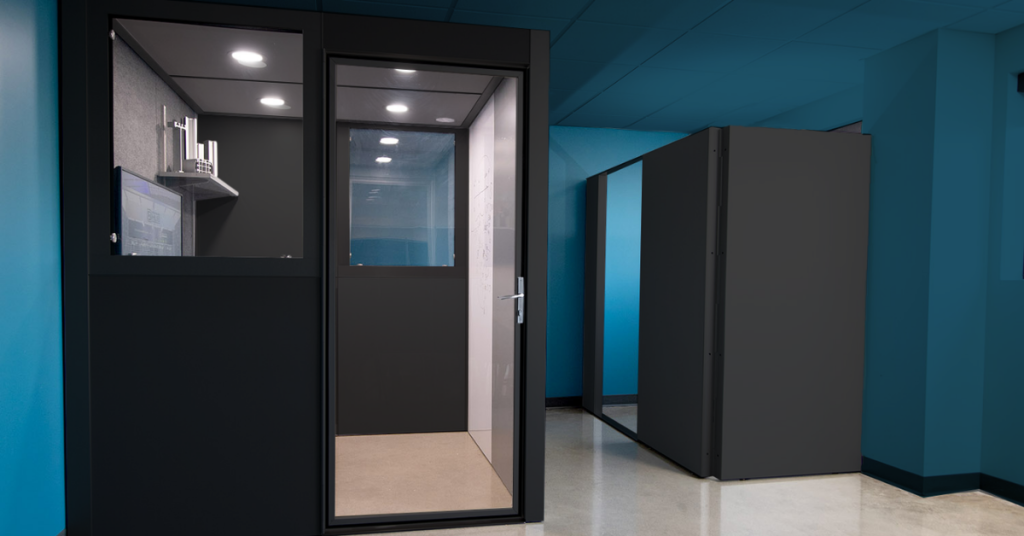
YOURspace builds every acoustic office pod around the construction factors that matter most for quiet. Here is what goes into each one:
- Up to four layers of material in the wall and door technology to stop unwanted noise
- Acoustic insulation, sealed seams and sound-absorbing interior panels
- Tempered glass, with double-glazed windows available on custom pods
- Built-in exhaust ventilation that keeps the pod comfortable with the door closed
- U.S.-sourced aluminum framing and modular panels you can reconfigure or replace
YOURspace makes its pods in the USA from its home base in Fort Wayne, Indiana. Modular construction means your pod can adapt as your space changes, and you can swap panels instead of replacing the whole unit.
Explore every detail of our office pod features, or browse ready-to-ship Quick Ship pods.
We keep the promise simple and honest: YOURspace pods are sound-dampening, not fully soundproof.
Where Sound Dampening Matters Most
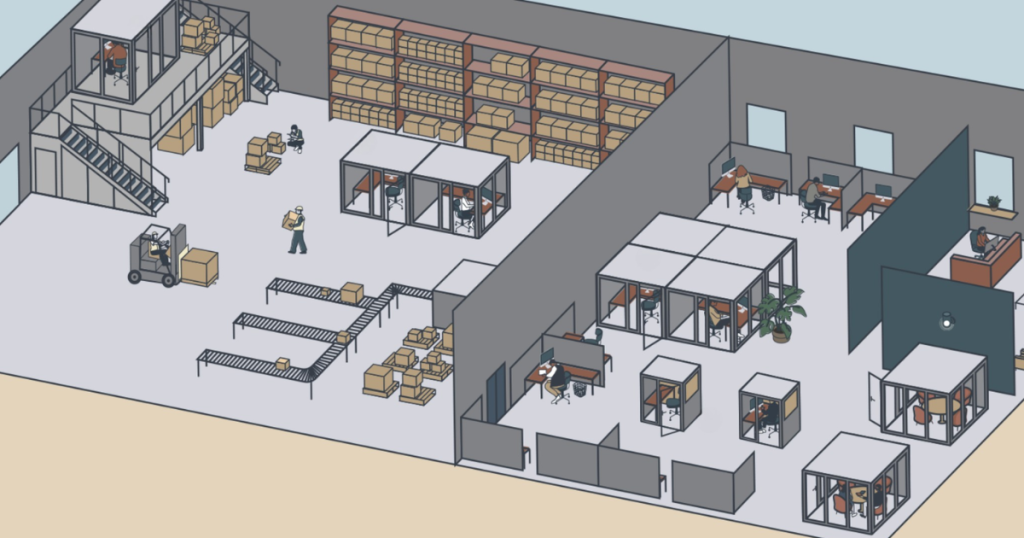
Every setting has its own noise problem. Here is how sound dampening helps across offices, schools, and sensory spaces.
In an open office or plant, an acoustic pod gives employees a private spot for calls without building a new room. Facilities teams skip the construction and still give people the privacy they need.
In libraries and on campuses, quiet pods give students a dedicated place to study, test or meet in small groups. They carve out calm space inside buildings that rarely stay quiet.
In sensory and wellness settings, a quiet pod offers a place to step away and reset. They create a calmer environment with fewer triggers.
Frequently Asked Questions
Are office pods soundproof?
No. Office pods are sound-dampening, not soundproof. A well-built pod cuts sound enough that people outside cannot follow a conversation inside, and outside noise fades into the background. A fully soundproof booth or pod would need heavy, sealed construction that does not work for a modular design.
What makes an office pod quieter?
Five factors make an office pod quieter: more layers of material in the walls and door, tight seals around the door and seams, quality glass, sound-absorbing panels inside, and ventilation that moves air without letting much sound through.
Does glass make an office pod less private?
Glass is usually the weakest point for sound in a privacy pod. Thicker or double-glazed glass, plus tight seals, helps. Many pods balance glass for light and openness with solid acoustic panels where privacy matters most.
What is the difference between STC and NRC?
The difference between STC and NRC comes down to blocking versus absorbing. STC describes how well a barrier blocks sound from passing through it, and NRC describes how much sound a surface absorbs. A good pod needs both: blocking keeps conversations private, and absorption keeps the inside from sounding echoey.
Do office pods need ventilation?
Yes. A closed office pod needs airflow to stay comfortable. Good pod design balances ventilation with sound control, since air paths can also carry sound. YOURspace pods include built-in exhaust fans.
Are YOURspace pods soundproof?
YOURspace pods are sound-dampening, not fully soundproof. They use up to four layers of material in the walls and door, acoustic insulation, sealed seams and sound-absorbing interior panels to significantly reduce noise.
Get a Quieter Space in Under 6 Weeks
Ready to give your team, students, or staff a calmer place to talk, focus, and reset? YOURspace Quick Ship pods come in standard sizes, arrive within 6 weeks of purchase, and install in about 2 hours.
Pick your size and finish, and start planning around a quieter space instead of a noisier one.
See Quick Ship sizes and finishes or talk to our team to get your custom order started.
Related Links
- What Size Office Pod Do You Need? A Capacity Guide by Use Case
- Office Pod vs Phone Booth: Which Is Right for Your Workspace?
- Buying Pods in Bulk? Here’s Why It’s a Better Investment
- Portable Office Pods: How to Choose the Right One (2026 Buyer’s Guide)
- 5 Add-Ons To Make Your Prefab Office Pod Fully Functional
- Office Pod Features
- Custom Pods
- Shop Quick Ship Pods
- FAQs
- Contact Us