TLDR: Adult sensory overload shows up as exhaustion, brain fog, and burnout. Sensory pods give adults a quiet, private place to reset in high-demand environments, helping organizations support focus, accessibility, and well-being without disrupting daily operations.
At a Glance:
- Sensory overload affects adults everywhere. Noise, lighting, crowds, and constant demands overwhelm the nervous system. Most spaces weren’t designed to support regulation, which leads to burnout over time.
- Sensory pods normalize recovery, not retreat. Adult sensory pods make short mental resets acceptable and accessible, reframing breaks as part of performance, wellness, and inclusion.
- Pods solve real problems across industries. From offices and hospitals to campuses, libraries, and airports, sensory pods support focus, stress recovery, and resilience in high-pressure environments.
- Adult-focused design makes the difference. Privacy, sound control, mature design, and customization are essential. YOURspace pods are built to blend into real-world spaces and meet adult needs without feeling clinical.
Noise has a way of piling up before anyone notices. The fluorescent hum overhead, the chatter spilling through thin walls, the constant expectation to stay alert, responsive, composed.
Adults move through these environments every day, carrying invisible weight in their nervous systems, learning to tolerate more than they were ever meant to absorb.
Most people do not call it sensory overload. They call it exhaustion. Irritability. Brain fog. Burnout. A sudden need to step outside, to find silence, to feel steady again.
More decision-makers are being forced to confront a basic truth: people cannot stay regulated in spaces that never allow them to breathe.
Sensory pods for adults offer a practical answer to this need. They create space for the nervous system to reset inside workplaces, campuses, healthcare facilities, and public buildings.
YOURspace designs sensory room pods that meet adults where they are, providing quiet, private environments built for real life, real pressure, and real human limits.
The question is no longer who needs these spaces. The question is why more organizations have not built them yet.
What Sensory Regulation Means for Adults
Adults experience sensory overload every day. That shouldn’t be seen as a weakness, but rather a challenge with our typical environment.
Bright lighting, constant noise, crowded spaces, rapid task switching, and social pressure all create mental strain that builds over time.
Most environments were never designed to support the way the brain and body process stress.
Sensory regulation is the ability to reset when the nervous system becomes overloaded. Adults need that reset just as much as children do, especially in workplaces, healthcare settings, and public environments where overstimulation is constant.
A sensory pod for adults provides a structured space where the body can return to baseline. They support regulation by reducing input and creating a controlled space where the brain can pause, recalibrate, and recover.
Most adults are conditioned to push through discomfort. Taking a break can feel unproductive. Stepping away can feel socially risky. Many people learn to mask sensory stress until it becomes burnout, shutdown, or escalation.
Few spaces exist where adults can decompress without explanation.
A sensory room pod changes that. It normalizes recovery as part of performance, wellness, and accessibility.
Who Uses Adult Sensory Pods (And Why)

Adult sensory pods are being adopted across industries because overstimulation is not limited to one population. Organizations use them to support focus, safety, and mental recovery in environments that demand a lot from people.
Here are a few of the most common use cases for sensory pods, and the problem they solve:
Corporate Offices and Hybrid Workspaces
The problem: Open offices and hybrid schedules increase distractions, stress, and cognitive fatigue.
The environment: Shared workspaces, high collaboration zones, constant digital noise.
The outcome: Employees gain a quiet reset space that supports focus, emotional regulation, and neurodiversity inclusion.
Many companies now view sensory pods for adults as part of workplace infrastructure, not a perk.
Healthcare Staff Decompression Areas
The problem: Nurses, physicians, and frontline staff face emotional strain and high-pressure decision-making.
The environment: Hospitals, emergency departments, behavioral health units.
The outcome: A private pod offers rapid recovery after intense moments, reducing burnout and improving resilience.
Short resets can prevent stress accumulation over long shifts.
Behavioral Health and Therapy Clinics
The problem: Adults in treatment often need a calming space before or after sessions.
The environment: Outpatient clinics, counseling centers, trauma-informed care facilities.
The outcome: Sensory pods provide non-stigmatizing support for regulation without feeling clinical or institutional.
The pod becomes a tool for stability, not isolation.
Higher Education Campuses
The problem: Graduate students, faculty, and staff operate under constant mental demand.
The environment: Universities, libraries, research buildings, student support centers.
The outcome: Adult sensory pods support quiet focus, stress recovery, and accessibility for neurodivergent learners and educators.
Campuses benefit from spaces that reduce sensory overwhelm without removing people from the community.
Libraries and Public Buildings
The problem: Public spaces are louder and more stimulating than ever.
The environment: Libraries, community centers, municipal buildings.
The outcome: Sensory pods offer quiet zones for adults who need calm for studying, job searching, or an emotional reset.
These library pods expand accessibility without requiring programming or staffing.
Transportation Hubs and Airports
The problem: Crowds, announcements, delays, and noise create stress and overload fast.
The environment: Airports, transit stations, travel lounges.
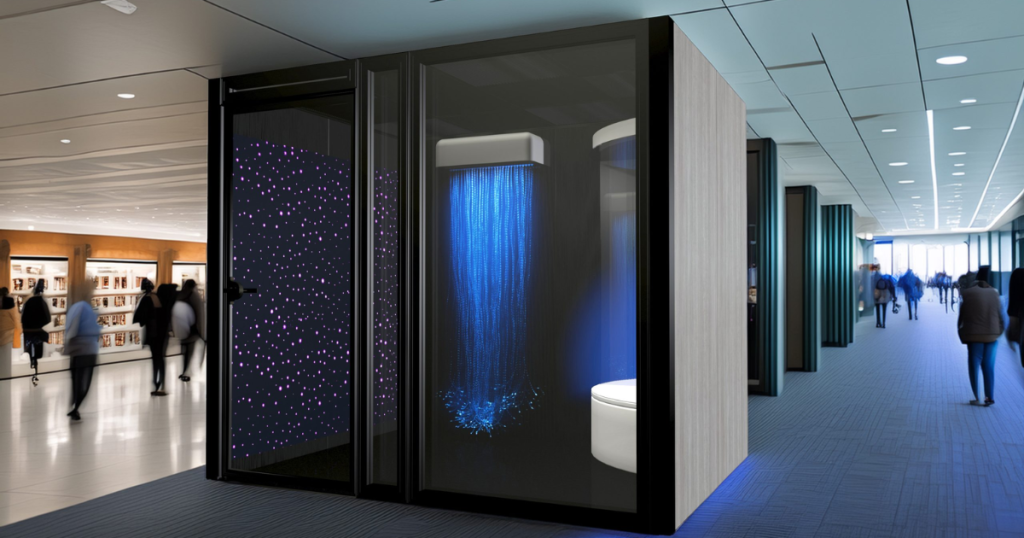
The outcome: Sensory pods provide relief for travelers who need a controlled environment to regulate before continuing their journey.
The pods can even be used as a place to rest (like airport sleeping pods).
Learn more about our office pods, study pods, and public spaces pods.
What Makes an Adult Sensory Pod Different
Adult sensory regulation requires a different approach than child-focused sensory rooms. Design, tone, and function matter.
- Design Maturity: Adult sensory pods are built to feel architectural and intentional. Clean lines, modern materials, and professional aesthetics help the space fit seamlessly into workplaces, campuses, and public environments.
- Privacy: Adults often avoid certain spaces if they feel exposed. A sensory pod offers separation without isolation, giving users a place to decompress without feeling watched or judged.
- Sound Control: Noise is one of the fastest drivers of overstimulation. Sound-dampening construction helps reduce external input, making the pod effective even in busy settings. People searching for a sensory pod for adults often prioritize quiet more than any other feature.
- Customization: Adult needs vary. Some users need low lighting. Others need tactile grounding. Organizations can configure pods based on environment, population, and goals without creating a one-size-fits-all space. Learn more about YOURspace custom pods.
How Organizations Typically Use Sensory Pods For Adults
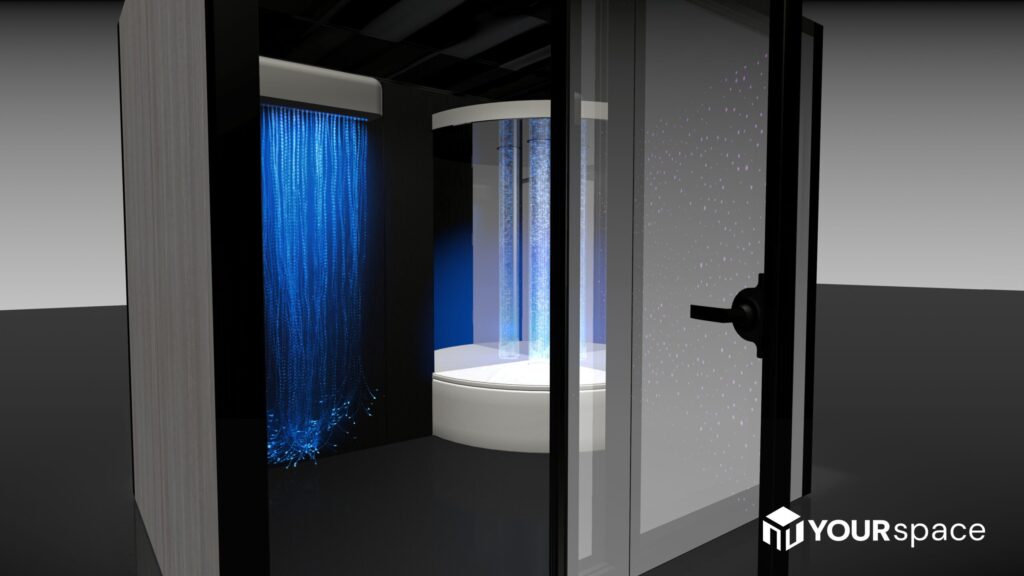
Adult sensory pods work best when they are simple, accessible, and normalized.
- Optional Use Without Pressure: The pod should be available as a resource, not an appointment. Adults regulate more effectively when autonomy is respected.
- Short Sessions (5 to 15 Minutes): Most users do not need long breaks. Brief sensory resets can restore focus and calm quickly.
- Integrated Into Existing Spaces: Sensory pods are often placed near staff areas, libraries, wellness rooms, or shared workspaces. The best results come when pods are part of the everyday environment.
- No Clinical Oversight Required: Adult sensory regulation does not require therapy supervision. Organizations use pods as a proactive infrastructure that supports mental clarity, accessibility, and well-being.
A well-designed sensory pod for adults creates a space where people can reset and return stronger, without disruption or explanation.
Get Sensory Pods for Adults In Your Environment
A well-designed sensory pod for adults creates a space where people can reset and return stronger, without disruption or explanation.
Organizations do not need to overhaul an entire building to offer that kind of support. A sensory room pod can be added as a practical, immediate step toward calmer workplaces, more inclusive campuses, and healthier public environments.
YOURspace builds sensory pods that are designed for adults, built for real-world pressure, and configured to fit the needs of your space. Custom options make it possible to create the right environment for your population, and quick ship models provide a faster path to bringing sensory regulation into your organization.
Contact our team to discuss the right solution for your workplace, campus, or facility.
Sensory Room FAQs
What is a sensory pod for adults?
A sensory pod for adults is a private, enclosed space designed to reduce sensory input and support nervous system regulation. These pods help adults reset in environments that are loud, stressful, or overstimulating, such as workplaces, campuses, healthcare facilities, and public buildings.
Are sensory pods only for autism?
No. Sensory pods support a wide range of adults, including people experiencing stress, burnout, anxiety, PTSD, ADHD, or sensory sensitivity. Many organizations use sensory room pods as part of inclusive design and wellness infrastructure, not as a specialized clinical tool.
How do sensory pods help adults manage overstimulation?
Sensory pods help by creating a controlled environment with fewer distractions, reduced noise, and greater privacy. This allows the brain and body to pause, recalibrate, and return to baseline, improving focus, emotional regulation, and overall well-being.
Where are adult sensory pods commonly used?
Adult sensory pods are used in many environments, including:
- Corporate offices and hybrid workspaces
- Hospitals and healthcare staff areas
- Behavioral health and therapy clinics
- Universities and higher education campuses
- Libraries and community centers
- Airports and transportation hubs
These spaces benefit most when people need calm in the middle of daily demands.
Are sensory pods for adults soundproof?
YOURSpace sensory pods include sound-dampening materials that significantly reduce outside noise. While not fully soundproof, adult sensory pods are designed to create a quieter, more calming space even in busy workplaces or public settings.
Do sensory pods require clinical supervision?
No. Sensory pods for adults are not medical treatment spaces. Organizations typically offer them as optional wellness and regulation spaces that employees, students, or visitors can use independently.
Can sensory pods be customized for different environments?
Yes. Adult sensory pods can be customized with features like lighting, ventilation, seating, acoustic control, and layout, depending on the needs of the space and population. Customization helps ensure the pod feels appropriate for professional, healthcare, or public settings.
Are sensory pods a good fit for workplaces?
Sensory pods are increasingly used in modern workplaces to support focus, reduce burnout, and provide neurodiversity-friendly spaces. They offer employees a quiet place to reset without leaving the building or needing special accommodations.
How do I choose the right sensory pod for my organization?
The right sensory pod depends on your environment, space constraints, and the needs of the people using it. Organizations often start by identifying where overstimulation occurs most, then selecting a pod that supports privacy, comfort, and accessibility. YOURspace can help evaluate custom options or quick ship models based on your goals. Contact us!
Related Links
- Sensory Pods
- 2026 Is The Year of Personal Space
- Sensory Pods Offer Comfort To Those With Sensory Processing Disorder
- Sensory Pod for Students with Autism Offers Comfort and Relaxation
- 7 Unique Ways to Use Privacy Pods
- Why Higher Ed Institutions Need Quiet Study Spaces
- Enhance the Airport Experience with Privacy Pods
- Custom Pods
- Shop Quick Ship Pods
- FAQs
- Contact Us